Posts

Showing posts with the label Sri Lanka

Discovering Sri Lanka: A Journey of Serenity, Sustainability, and Savory Delights at Makini Bush Camp

Image
Sri Lanka, a captivating jewel nestled in the Indian Ocean, has garnered widespread acclaim as a must-visit destination endorsed by revered travel authorities like Forbes and Lonely Planet. Its kaleidoscope of landscapes, steeped in history, and vibrant cultural tapestry promise a voyage of discovery for every traveler . When selecting accommodations for your Sri Lankan sojourn, several factors warrant consideration to ensure an enchanting stay. The location of your lodging serves as a pivotal factor in shaping your experience. Opting for a retreat tucked away from urban clamor allows you to bask in the serenity of nature while remaining conveniently close to key attractions. A truly fulfilling retreat should offer a harmonious blend of opulence and experiential pursuits tailored to diverse tastes and budgets. From opulent spa indulgences to thrilling wildlife escapades, a spectrum of offerings ensures there's something for everyone to relish. In today's conscientious travel ...

Birding in Sri Lanka for Beginners

Image
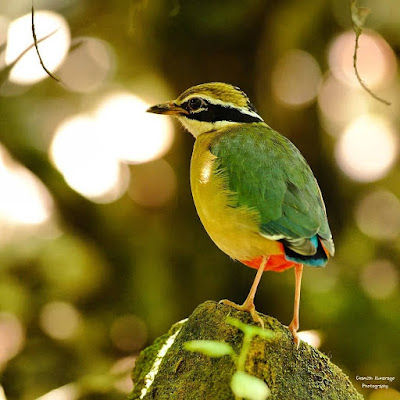
Sri Lanka, an island off the South-Eastern coast of India is home to around 500 species of birds, with 240 breeding residents. The migrant season which takes place between September to March, sees this number swell up to about 500 species studded with rare migrants as well as some vagrants. Lately, the vagrant numbers seem to have increased, and never before seen rarities like the Chinese Pond Heron and the Greater Spotted Eagle were spotted. This may be due to adverse weather patterns that have pushed birds off their normal migration paths. Sri Lanka also has a high endemicity where birds are concerned. To date, there are 33 species listed as endemic, which augurs well for the enthusiastic birder who is keen to visit places and track down endemics. Most travel to Papua New Guinea, but Sri Lanka is just as rich in avian diversity and much easier to traverse in comparison. I would encourage you to read this article [1] written by Gehan De Silva Wijeratne, a naturalist and prominent per...

Finding the diversity of avifauna at Makini

Image
The Makini philosophy revolves around the conservation and improvement of a balanced ecosystem, which includes all flora and fauna, in and around the camp. We have already commenced several conservation projects aimed at identifying habitats of different avian and mammalian species within the campsite. It is equally important to collect as much data as possible to measure the success of our conservation activities pre and post implementation. This includes observations and indicators documented under varying conditions and seasons. The first such initiative was a bird species and number count, done within a 4-hour period within the camp and surrounding areas. Bird Count Counting individual birds we see is a daunting task, but it can give valuable information on population density and causes that would grow or shrink the bird population. These changes may indicate shifts in climate change, habitat loss, pollution levels, migration timing, and more. Accuracy of the figures and taking the...

Elephants in Sri Lanka, why they're important?

Image
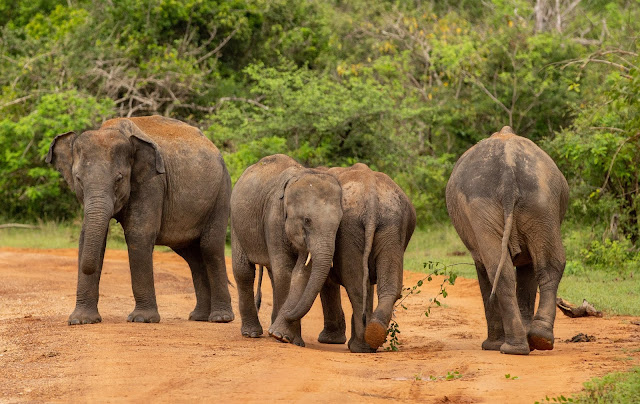
The Sri Lankan elephant (Elephas maximus maximus) is one of three recognized subspecies of the Asian elephant, that's native to Sri Lanka. They're spread across almost every part of the country from the dry low lands to mountains and rainforests. Though they live all over the island, Minneriya, Kaudulla and Udawalawa national parks give ample opportunities to see and photograph Sri Lankan Elephants in large herds. Elephants eat almost every part of the tree and have a particular interest in aquatic plants like Lotus and Water Lillies. They eat up to 150-200 kilograms of vegetation every day. Sri Lankan Elephants are considered as the most intelligent elephant variety. They have 90% of the brain developed when they are born and can adapt to any environment in no time. Elephants, in general, are known to be led by the matriarch because the eldest (female) elephant, the most experienced one in a herd knows where to find water at different times of the year. However, if you take Sr...

Prime Time To See Sloth Bears in Yala, Sri Lanka

Image
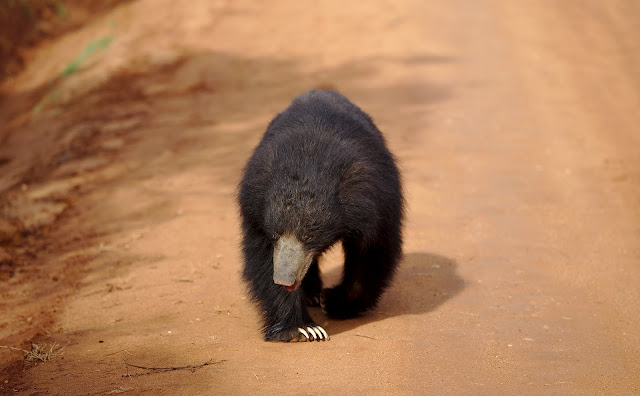
Yala homes the only bear species found in the Sri Lankan wilderness, the Sri Lankan sloth bear ( Melursus ursinus inornatus ) which is a subspecies of sloth bear that’s native to Sri Lanka. Sri Lankan sloth bear population is highly threatened and consider as critically endangered due to habitat loss. The current bear population in the wild is a little higher than 500. Yala national park provides ample opportunities to see and photograph the Sri Lankan sloth bear in its native wild habitats. But the best chances to see bears are either during the rainy season or during the Palu season. Sloth bears love to eat termites that live inside termite mounds. They have to break the tough solid structure to put its long mouth in and suck termites off the mound. After the rain, this becomes easier for bears as the mound gets soaked and weakens its structural integrity. If you’re visiting Yala, and want to see bears, your chances will increase if you go in the rainy season, however, that might not...